BG & AI Post 3: The Gita’s Wisdom on Ethical AI in Education and Writing

Rajendra Kumar Panthee
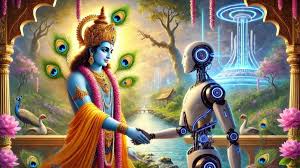
“बन्धुरात्मात्मनस्तस्य येनात्मैवात्मना जितः।
अनात्मनस्तु शत्रुत्वे वर्तेतात्मैव शत्रुवत्॥”

(Bandhur ātmātmanas tasya yenātmaivātmanā jitaḥ |
Anātmanas tu śhatrutve vartetātmaiva śhatru-vat ||)

Meaning: The mind can be our greatest friend or enemy, depending on how we control it. Self-mastery is essential for achieving balance and success.

Ancient Wisdom for Modern Classrooms

AI has entered our classrooms. I’ve watched it happen over the past two years. It brings extraordinary possibilities. Also profound ethical dilemmas. The Bhagavad Gita offers timeless insights into knowledge and right action. I’ve been studying the Gita, and these insights give us a spiritual framework for this transition. Technology and consciousness are colliding right now. Krishna’s teachings on self-effort (yatna), discernment (viveka), and selfless service (nishkama karma) have become unexpectedly relevant. They can guide how we bring AI into education and writing. Not as a crutch. As a lamp showing the path to true wisdom.

AI as Support for Self-Effort in Learning

The Bhagavad Gita talks a lot about self-effort (yatna) in acquiring true knowledge. How does this connect to AI in education? Technology should enhance a student’s intellectual journey. Not replace it. AI tutors and writing assistants can provide valuable scaffolding. Personalized feedback. Resources. But we must avoid creating dependency. Krishna’s advice to Arjuna in Chapter 6 about self-elevation through one’s own efforts reminds us something important. Real learning requires struggle.

Think about an ethical AI system in education. It would function like the ideal guru. Guiding students to find answers themselves. Not providing ready-made solutions. This preserves the sanctity of learning while harnessing technology’s benefits.

Maintaining Truth and Authenticity in AI-Assisted Writing

The Gita emphasizes satya (truth) and authentic expression. This provides crucial guidance for using AI in writing. AI tools can help with structure and grammar. Sure. But they risk promoting intellectual dishonesty when people use them to generate entire pieces of work. The concept of asteya (non-stealing) applies here. You’re passing off AI-generated content as your own? You’re violating this principle.

What would ethical use of writing AI look like? Using it as a starting point for your own ideas. Not as a replacement for original thought. The Gita warns against moha (delusion). This feels particularly relevant now. AI tools might generate plausible but false information. Users need to exercise buddhi yoga (discerning wisdom) in verifying outputs.

The Dharmic Educator’s Approach to AI

Teachers bringing AI into education must embody the Gita’s ideal of sthitaprajna. Wisdom and balance. AI should serve as an aid to teaching. Not a replacement for the human connection at the heart of education.

Krishna guided Arjuna through dialogue. He didn’t just give him answers. Educators should use AI the same way. Stimulate discussion and critical thinking. Not as a shortcut. The Gita teaches about performing one’s duty without attachment to results. This reminds educators what really matters. True understanding is the goal. Not just improved test scores or efficiency.

When evaluating AI tools, educators must apply the Gita’s principle of samatva (equality). We need to make sure these tools don’t perpetuate biases. Or disadvantage certain groups of students.

Conclusion

The Bhagavad Gita’s timeless wisdom gives us a moral compass for navigating AI in education and writing. We can apply principles like nishkama karma (selfless action) and jnana yoga (the path of wisdom). These make sure that powerful technologies serve human growth. Not undermine it. When does AI become dharmic? When it helps students develop their own understanding instead of providing easy answers. When it supports authentic expression instead of replacing it. When educators use it to enhance their sacred role instead of automating it. What we might call “Krishna-conscious AI” can become a true aid on the path to knowledge. It aligns with the Gita’s ultimate purpose. Awakening human potential and wisdom. How should we measure AI’s success in education? Not by efficiency. Not by convenience. But by how well it helps students and teachers fulfill their dharma of teaching and learning with integrity.
BG & AI Post 2: The Ancient Wisdom of Bhagavad Gita & Self-Regulation in AI Use

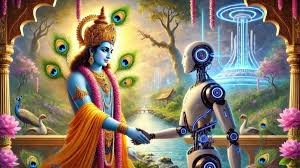
“उद्धरेदात्मनात्मानं नात्मानमवसादयेत्।
आत्मैव ह्यात्मनो बन्धुरात्मैव रिपुरात्मनः॥”

(Uddhared ātmanātmānaṁ nātmānam avasādayet |
Ātmaiva hyātmano bandhur ātmaiva ripur ātmanaḥ ||)

“One must elevate oneself by one’s own mind, not degrade oneself. The mind is both a friend and an enemy.”

From Science Fiction to Everyday Reality

AI is no longer just a tale. We do that every day now. ChatGPT instructs us what to do. Streaming providers suggest shows that we might enjoy. AI systems affect the way individuals learn, work, and choose what to do. These technologies are really helpful. They make it easier and faster for you to get things done. But they also raise significant moral issues that we need to deal with. Algorithms that are unfair. Not following the rules for keeping data private. The chance of abuse. We can’t separate how technology is changing from what people care about. If we don’t think critically, we can let these institutions control us. We stop being active participants in the growth of technology and instead become passive users.


The Unseen Costs of Using AI Without Thinking

What happens if we don’t think about AI? Many diverse sections of society display the effects. Students want to employ AI technologies to get their work done faster. They hurt their learning by putting getting rapid answers ahead of getting a better understanding. People who work in other industries might believe what AI says without checking it out carefully. They unknowingly keep biases that are built into the training data going. If we don’t keep AI systems under check, they might mislead, invade people’s privacy, and make the gap between rich and poor even bigger. These problems highlight why we need to be more than merely excited about what AI can achieve. We need to think carefully about what it can and can’t do.

The Gita’s Lesson For Self-control

The Bhagavad Gita still has significant information. It seems like the teachings it teaches about self-control and discipline are so important right now. Chapter 6, Verse 5 says a lot about how people are: “One must elevate oneself by one’s own mind, not degrade oneself.” The mind can be both helpful and harmful. This part says something important about how we use technology. The way we train our minds could help us grow or keep us from expanding. This is how AI works as well. These tools can either enhance or hinder our potential, depending on how we use them. The Gita talks a lot about how to be responsible for oneself and how to lead yourself. This is a fantastic way to live smartly and honestly in the age of AI.

Self-Regulation in Thoughts to Action

How can we leverage what we currently know to make new technology work for us? There are certain things that are very similar. The Gita’s idea of self-regulation tells us that the first step to making moral decisions about AI is to make moral decisions about ourselves. Think about the kid that uses ChatGPT to help them come up with new ideas instead of just copying what they already have. Or the expert who doesn’t only believe what AI says but also looks at it in light of other sources. According to this view, developers should put ethical concerns, such as fairness and openness, ahead of business needs, such as speed and efficiency. The Gita also talks about how hard it is to stay disciplined. This is especially important given since people are praising quick fixes and fast results. This acknowledgment is especially important when we consider ways to encourage the usage of ethical AI. Education, careful system design, and the right governance frameworks are all very important.

Creating Awareness for a Future AI Use

To move forward, you need to put your philosophical ideas into practice in the real world. Schools can help students learn how to think more critically. How? By showing students how to use AI tools in a safe way. Don’t use them instead of thinking; use them to help you learn more. People who design technology can make systems that make people think. Things that make people think about what their actions mean. Things that show that AI-generated material isn’t always good. We need rules that let fresh ideas come forth while also pushing for honesty and responsibility. A lot of the Gita is about self-control. We can make a location where AI is a tool for real human growth by adding structural supports to that. Not a power that keeps us from accomplishing things.

The Human Imperative in the Machine Age AI is more than just a tech issue. It’s very human. It’s time for us to choose new ideas. The Bhagavad Gita tells us that we can’t move forward by merely employing things from the outside. It depends on how we use them. We can exploit AI’s power if we work on being self-aware and disciplined. We can also keep what makes us human. The ability we have to choose. Our sense of duty. Our promise to do the right thing. This balanced manner of doing things gives us the best chance to find answers that really help people reach their highest goals.