
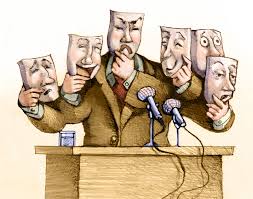
Democracy does not usually die on the day soldiers take over the streets or leaders cancel elections. It dies much earlier—when institutions stop working, when truth fractures into competing stories, and when elections become ceremonies rather than choices. By the time people openly admit democracy is dead, it has often been dead for years.
Nepal today stands dangerously close to that moment of delayed recognition.
The killings of Gen Z protesters on September 8, 2025—76 lives lost, including a 12-year-old child—were treated as a tragic rupture in an otherwise functioning democratic system. The prime minister resigned. Elections were scheduled for March 5, 2026. International observers praised “youth power” and “democratic correction.”
But this framing may be comforting rather than accurate.
The harder question is this: what if Nepal’s democracy had already stopped functioning long before the bullets were fired? What if the coming election is not democratic renewal, but democratic theater—rituals performed over a system that no longer responds to citizens?
The Quiet Capture of Democracy
Democratic death in Nepal has not come through a single coup or constitutional rupture. It has come through slow institutional hollowing.
Courts appear formally independent yet are widely perceived as politically negotiated. Election commissions conduct polls, but outcomes are increasingly treated as bargaining chips rather than mandates. Parliament exists, but governance happens elsewhere—through coalitions formed not to govern, but to block others from governing.
This is not the absence of democracy’s forms. It is the absence of democracy’s function.
When elections no longer resolve political conflict—when they merely postpone it—democracy enters a terminal phase.
The Collapse of Shared Reality
What followed September 8 should alarm us more than the violence itself.
Within hours, Nepalis were living in entirely different realities. Some believed the protests were foreign-engineered. Others blamed neighboring powers. Still others insisted old parties orchestrated chaos to justify repression. Each explanation carried fragments of plausibility—and none commanded broad agreement.
This is what democratic collapse looks like in the 21st century: epistemological breakdown.
When citizens cannot agree on what happened, who is responsible, or whether authority is legitimate, democratic decision-making becomes impossible. Voting requires shared facts before shared rules. Nepal is losing both.
What is striking—and deeply worrying—is how fast this happened. Other democracies took years, even decades, to reach this point. Nepal reached it in days.
The Geopolitical Cage
Nepal’s crisis cannot be understood without confronting its geography.
Caught between two giants—India and China—Nepal exists in a state of permanent external balancing. Neither power can dominate completely, but both can destabilize endlessly. This does not protect democracy. It corrodes it.
Governments are no longer judged primarily by competence or public mandate, but by perceived alignment. Domestic political struggles become proxy contests. Elections produce not authority, but leverage.
In such a system, no government truly governs—and no opposition truly waits its turn. Everyone negotiates sideways.
The result is not sovereignty, but suspension.
Elections as Performance
This is why so many Nepalis approach the March 5 election with cynicism rather than hope.
Before a single vote is cast, coalitions are being discussed to neutralize outcomes. Young activists are torn between participation and boycott, knowing both choices may legitimize a broken process. Ordinary citizens expect dispute, paralysis, and blame—regardless of results.
When nobody believes an election will settle anything, the election has already failed its democratic purpose.
What remains is performance: ballots, speeches, observers, statements—without resolution.
What This Moment Actually Demands
The question before Nepal is not simply who should win on March 5.
It is whether Nepalis are willing to acknowledge democratic death honestly—because only honest acknowledgment creates space for renewal.
Pretending democracy is healthy when it is not does more damage than admitting its failure. It delays reform. It exhausts citizens. It turns courage into silence and sacrifice into symbolism.
The young people who died on September 8 did not die for theater. They died confronting a system that no longer listened.
If Nepal continues performing democracy without repairing it—without restoring institutional credibility, shared truth, and genuine accountability—the rituals will continue while the substance disappears.
Democracy rarely announces its death. It waits for us to notice.
March 5 will not tell us whether democracy survives.
It will tell us whether we are ready to face the truth about its condition.
 Ved Vani Community Literacy Forum