
Rajendra Kumar Panthee
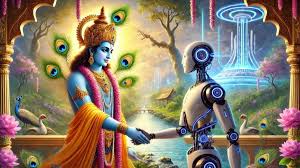
We live in a time when computers can write essays, solve math problems, and make legal papers. When machines can make information quicker than we can read it, this makes us ask a very important question: what is knowledge? I keep going back to an old book that has helped people for thousands of years. The Bhagavad Gita. Chapter 4, Verse 38 says, “न हि ज्ञानेनसदृशं पवित्रम् इह विद्यते”—”There is nothing in this world that is as pure as knowledge.”
This lesson has a different meaning nowadays. The Gita makes a clear difference between facts and real knowledge. Knowledge that is real changes us. Not just tells us. This difference is really important as we figure out how to use AI in communication and education.
The Cost of Easy Access to Information
AI tools are really useful. Students write essays with very little help. Professionals can write full reports in only a few minutes. Researchers quickly put together complicated literature. But this ease of use raises a lot of red flags. Biases in algorithms. Mistakes that seem authoritative. Maybe the most worrying? The slow loss of independent critical thinking. Studies support these worries. AI tools clearly make writing more productive. But they also make us question academic honesty and the growth of critical thinking skills (Kumar et al., 2024). I see this tension a lot in my own classroom. Students turn in material that shows mechanical skill but not real intellectual interest. Papers that show skill but don’t grasp. The Gita predicted this problem thousands of years ago. Chapter 4, Verse 39 teaches: “श्रद्धावाँल्लभते ज्ञानं”—”One who has faith, who is focused on wisdom, and who has conquered the senses finds knowledge.” To know something for real, you have to be actively and mindfully involved. Not just sitting back and taking it all in. Turkle’s (2011) book Alone Together is a modern example of this idea. She warns against technological solutions that give the impression of companionship without the responsibilities of a partnership (p. 1).
The Gita posits that genuine knowledge transforms into “the purest power,” serving as a guiding force for ethical conduct and self-realization in our technology-driven society. Chapter 13, Verses 8–12 list the traits that make up knowledge. “Amanitvam” (humility) and “atattva-arthavad-jñānam” (knowledge of genuine essence). Shannon Vallor, a technology ethicist, calls these qualities “technomoral virtues” and says that “emerging technologies require us to develop new moral capacities” (Vallor, 2016, p. 2). The similarity struck me. Both ancient wisdom and modern ethics stress the importance of developing discernment instead than just gathering facts.
Beyond Algorithms
The Gita’s saying that “knowledge is the ultimate purifier” is quite relevant to the way we teach writing with technology today. This purity means that everything are clear. The ability to see the moral principles that underlie algorithmic outcomes. When students use AI to learn about climate change, real understanding involves asking if the summary they get is based on scientific consensus or hidden biases. When teachers make assignments that use AI, they need to be honest about the tool’s strengths and weaknesses. When organizations use AI systems, they should think about more than just how well they work; they should also think about fairness and accessibility.
Recent research shows that kids are using AI more and more for different schoolwork. From help with writing to help with research. However, numerous individuals articulate apprehensions regarding the preservation of academic integrity (Thompson et al., 2025). This tension highlights the teachings of the Gita. Information alone is not enough. We need to be able to determine what is good and bad to use it properly. In Chapter 18, Verse 20 of the Gita, it says, “सर्वभूतेषु येनैकं भावमव्ययमीक्षते”—”That knowledge by which one sees the one indestructible reality in all beings is in the mode of goodness.” True knowledge sees the unity that lies beneath everything. Winner (1977) contends that technologies are not only instruments but “forms of life” that transform social relations and ethical possibilities (p. 323). Just having information isn’t enough. We need to be smart about how we use it.
Self-Realization Beyond Passive Consumption
Students are very tempted with AI tools. Just because AI outputs look confident and complete, you shouldn’t treat them as authoritative. These systems handle a lot of data and show results with what seems like certainty. The Gita, on the other hand, teaches something very important about how knowledge might lead to self-realization (ātma-saṃyama). Real learning changes who you are. Not just passing on information. Chapter 6, Verse 5 emphasizes this self-directed nature of wisdom: “उद्धरेदात्मनात्मानंनात्मानमवसादयेत्”—”One must elevate oneself by one’s own mind, not degrade oneself.” This principle resonates with media theorist Neil Postman’s critique in Technopoly, where he cautions that technologies can become “a kind of thought-world which might become autonomous, a way of thinking that no longer knows that it is only one way of thinking” (Postman, 1992, p. 71). So, critical AI literacy helps us become more aware of how we use technology. Not as passive customers, but as discriminating practitioners who maintain human judgment in the face of automation. Students who understand this idea see AI as a tool for working together, not as a source of wisdom. They keep their intellectual independence while getting help from technology.
Our Duties as Moral People
The Gita defines dharma as doing things that are in line with higher understanding. As educators, it is our moral duty to shape how the future generation interacts with AI. Chapter 3, Verse 35 says, “श्रेयान्स्वधर्मो विगुणः परधर्मात्स्वनुष्ठितात्,” which means “Better to do your own duty poorly than to do someone else’s duty well.” Instead of just copying what others do, we need to accept our own duties. Luciano Floridi, a philosopher, calls this “distributed moral responsibility” in the digital world. He contends that ethical dilemmas necessitate “a new level of abstraction,” wherein accountability is distributed throughout networks of human and non-human agents (Floridi, 2014, p. 48). This dharma involves making sure that AI systems don’t make writing instruction even less fair. It involves creating experiences that teach students not only how to use AI well, but also how to ask good questions. What matters most? It entails simulating reflective technology utilization. Showing that even the most powerful tools need people to help them do good things.
Discernment Instead of Information
AI systems include the biases and flaws of the data they were trained on. No matter how advanced. The Gita’s focus on viveka (discrimination/discernment) helps us tell the difference between shallow knowledge and greater wisdom. Verse 11 of Chapter 13 says that “tattva-jñānārtha-darśanam” (philosophical knowledge of truth) is a part of wisdom. Understanding that goes beyond what you see. When a language model writes an essay about historical events, viveka indicates identifying something essential. The system gives information without knowing what it means. It copies patterns from training data without understanding what they mean. In his book Computer Power and Human Reason, computer scientist Joseph Weizenbaum made a distinction between “deciding” and “choosing.” Algorithms tell computers what to do. But only people make choices depending on what they think is important (Weizenbaum, 1976, p. 227).
This discernment include the identification of absent views. Especially from marginalized communities that are not well represented in training data. Recent studies underscore comprehensive methodologies to comprehend the impact of AI on conventional concepts of originality and intellectual integrity (Zhang et al., 2025). Viveka lets us evaluate the hidden power we give to technology outputs just because they look polished and sure of themselves.
Balanced Action with Tech
The Gita’s karma yoga (path of action) not only questions AI’s limits, but it also shows how to keep human agency in writing instruction that is becoming more automated. In Chapter 2, Verse 47, it says, “कर्मण्येवाधिकारस्ते मा फलेषु कदाचन”—”You have the right to do your duties, but you don’t have the right to the results of your actions.” When it comes to AI ethics, this means seeing technology as a more like partner than like an authority. Siva Vaidhyanathan, a media expert, warns against “techno-fundamentalism,” which sees technology as the answer to all issues (Vaidhyanathan, 2011, p. 182). As a teacher, karma yoga means making tasks that use AI as a starting point for deeper thinking. Not a place to get speedy answers. For students, it means learning to be confident enough to change, question, or add to AI-generated content instead of just accepting it. This keeps room for human creativity and intuition while using AI’s processing capability.
The Three Modes of Engagement
The Gita says that everything of nature has three properties (gunas). Tamas (inertia/ignorance), rajas (passion/activity), and sattva (harmony/goodness). This paradigm shows us how we might think about AI ethics. Chapter 14, Verses 6-8 talk about these traits, and sattva is described as “illuminating and free from evil” (प्रकाशकं च अनामयम्). Tamasic involvement with AI? Either accepting it without question or completely rejecting it. Positions that come from not knowing the details of technology. What does rajasic involvement mean? People are worried about “keeping up” with AI or employing technology mostly for their own gain. Sattvic wisdom is always in equilibrium. Honest. Focused on the common good. This corresponds with what STS academic Sheila Jasanoff refers to as “technologies of humility,” which are ways of recognizing the limits of prediction and control in technological systems (Jasanoff, 2003). When it comes to AI ethics for writing, the sattvic approach puts honesty ahead of ease. It makes sure that users know how systems work instead of thinking of them as magic boxes. It puts fairness ahead of speed. Asks if tools work equally well for all users. It puts the long-term good of society ahead of short-term gains. Asking how today’s new ideas will change how we learn in the future.
Real-Life Uses in the Classroom
I have made a number of exercises that turn Gita wisdom into useful things to perform in the classroom.
The Autopsy of AI: Just like the Gita tells people to think about themselves, students critically look at AI outcomes. They look at how a chatbot responds to find any biases, logical gaps, or missing context. When AI writes an essay about globalization, students look into whether the point of view supports economic powers or takes into account how it affects developing countries. The goal is not to reject AI, but to learn how to use viveka (discernment) to understand what it produces. Recognizing both strengths and weaknesses.
Rhetorical Remixing: Students improve the rhetorical efficacy of AI-generated content based on the Gita’s lesson that knowledge without application is incomplete. They offer emotional appeal by telling stories that AI can’t really tell. They add to AI’s legitimacy by including expert viewpoints and a variety of points of view that aren’t well represented in its training data. They make the framework of the argument more logical so that it is easier to follow. Showing that human intuition is still important for communication that really works.
Discussions about Moral Dilemmas: The Gita gives Arjuna moral problems that he must think about deeply. In the same way, talking about AI problems in class helps students learn how to think about ethics in more complex ways than just “good” or “bad.” Students think about whether universities should utilize AI detectors if they flag non-native English speakers more than they should. Is it wrong to use AI to help in employment if the algorithms favor some groups over others? When does AI help with writing become stealing? These discussions help people become more aware of ethics, which the Gita says is necessary for sensible behavior.
Working Together with AI: Karma yoga in the Gita stresses doing things well. It shows how to write together by considering technology use as a planned cooperation. In the first stage, AI makes the first content. Write rough drafts of your outlines or thesis statements. In stage two, students improve this material by thinking critically about it and sharing their own thoughts. Changing arguments. Adding more detail. Challenging ideas. In stage three, peer feedback focuses on human inventiveness and judgment. Students assess the efficacy with which peers converted AI-generated foundations into original creations. This is similar to what the Gita says: that doing with wisdom leads to better results than either knowledge or action alone.
Old Knowledge for New Technology
The Gita’s timeless wisdom is very helpful as AI changes how we learn and talk to each other. It teaches us that “knowledge is the ultimate purifier,” which means that being able to use technology isn’t enough; we also need to be able to tell right from wrong. Chapter 18, Verse 30 says that sattvic insight is the ability to “see the unified existence in all beings” (सर्वभूतेषु येनैकंभावमव्ययमीक्षते). Proposing a holistic viewpoint that goes beyond binary oppositions. We can avoid becoming too excited or too quick to reject AI by using this balanced wisdom. Instead, they found a middle ground of informed participation. This is similar to what philosopher Hans Jonas calls the “imperative of responsibility” in the ethics of technology. A duty that guarantees technology promotes rather than hinders human development (Jonas, 1984, p. 11).
Towards Technological Harmony
I picture what could be dubbed “technological sattvana” (technology harmony). Systems that protect human dignity. Encouraging people to think critically. Serving the good of the whole. The Gita’s Chapter 18, Verse 37 says that sattvic bliss is “like poison at first but like nectar in the end” (यत्तदग्रे विषमिव परिणामेऽमृतोपमम्). Suggesting that developing discernment may seem harder at first than just taking in information, but in the end it leads to more satisfaction.
To get this harmony, developers need to make deliberate design choices. Teachers should think carefully about how to put their plans into action. Users need to be critically aware. It requires making AI systems clear enough that people can question them. Able can be changed for the better. Ethical enough to support fairness. This is in line with what Martha Nussbaum calls “capabilities theory.” It looks at how technologies may make more meaningful choices and activities available to people, not fewer (Nussbaum, 2000, p. 78).
A Way Forward
Chapter 4, Verse 42 says, “तस्मादज्ञानसंभूतं हृत्स्थं ज्ञानासिनात्मनः”—”Therefore, with the sword of knowledge, cut asunder the doubt born of ignorance that lies in your heart.” Knowledge is a tool for dealing with doubt. Not by getting rid of it completely, but by being aware of it.
By encouraging thoughtful questioning based on the Gita’s teachings, we may create a future where AI enhances rather than replaces the unique art of human cognition and expression. This future doesn’t fear progress in technology; instead, it makes sure that progress helps people and the wisdom of the group.
AI should not be seen as the end of the road, but as a powerful tool that can help us understand things better. The Gita depicts knowledge not solely as information but as a catalyst for transformation. Vallor (2016) defines “technomoral wisdom” in her examination of virtue ethics in the technological era, emphasizing the necessity to discern how technologies might facilitate rather than hinder human flourishing (p. 6). We realize the Gita’s idea of knowledge as the ultimate cleanser in this way. Finding a way through our digital world in the wisdom of the past.
References
Floridi, L. (2014). The ethics of information. Oxford University Press.
Jasanoff, S. (2003). Technologies of humility: Citizen participation in governing science. Minerva, 41(3), 223–244. https://doi.org/10.1023/A:1025557512320
Jonas, H. (1984). The imperative of responsibility: In search of an ethics for the technological age. University of Chicago Press.
Kumar, A., Patel, R., & Singh, V. (2024). Using artificial intelligence in academic writing and research: An essential productivity tool. Computers and Education: Artificial Intelligence, 6, Article 100120. https://doi.org/10.1016/j.caeai.2024.100120
Nussbaum, M. (2000). Women and human development: The capabilities approach. Cambridge University Press.
Postman, N. (1992). Technopoly: The surrender of culture to technology. Knopf.
Thompson, K., Williams, D., & Lee, S. (2025). University students describe how they adopt AI for writing and research in a general education course. Scientific Reports, 15(1), Article 92937. https://doi.org/10.1038/s41598-024-85329-8
Turkle, S. (2011). Alone together: Why we expect more from technology and less from each other. Basic Books.
Vaidhyanathan, S. (2011). The googlization of everything (and why we should worry). University of California Press.
Vallor, S. (2016). Technology and the virtues: A philosophical guide to a future worth wanting. Oxford University Press.
Weizenbaum, J. (1976). Computer power and human reason: From judgment to calculation. W. H. Freeman.
Winner, L. (1977). Autonomous technology: Technics-out-of-control as a theme in political thought. MIT Press.
Zhang, Q., Adams, B., & Wilson, T. (2025). Reassessing academic integrity in the age of AI: A systematic literature review on AI and academic integrity. Computers & Education, 228, Article 105269. https://doi.org/10.1016/j.compedu.2024.105269
June 18, 2025
 Ved Vani Community Literacy Forum